

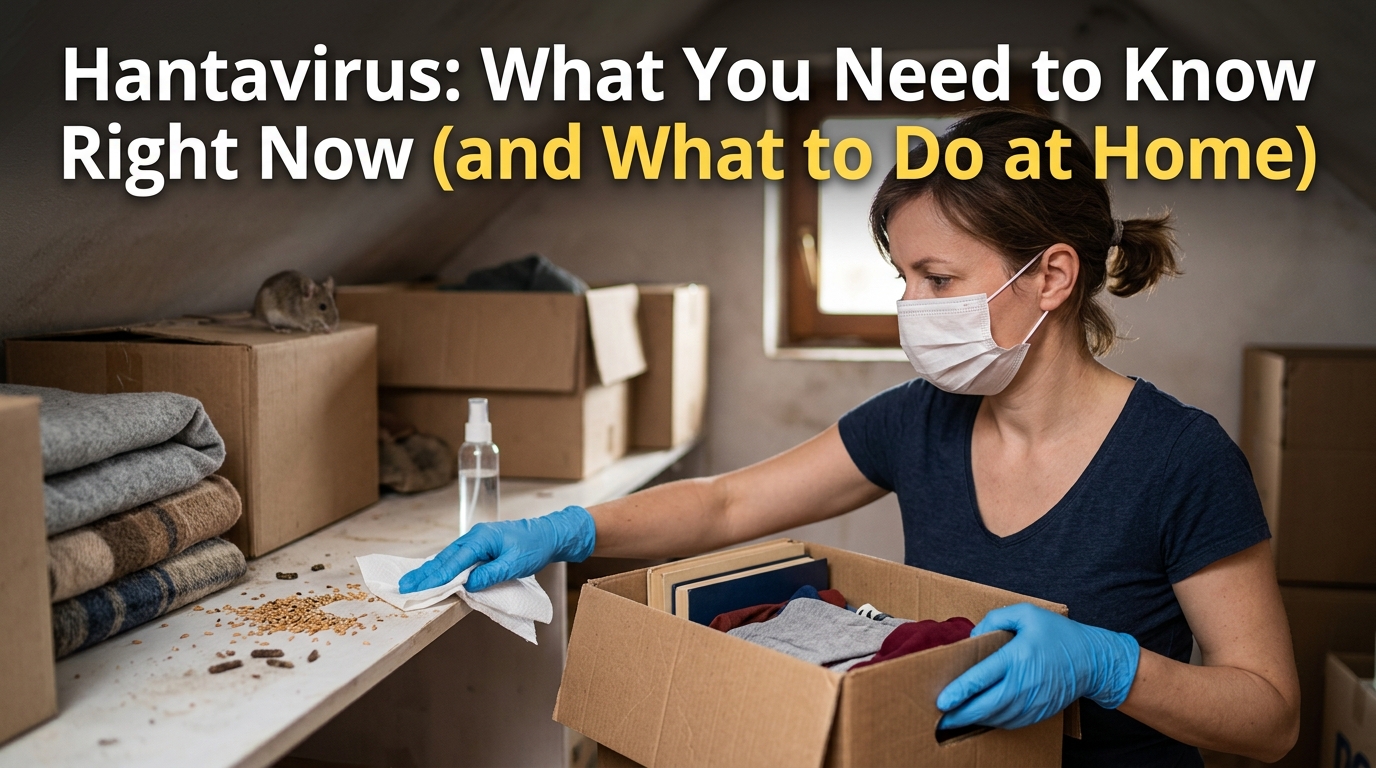
Definition: Hantavirus is a group of rodent-borne viruses that can cause severe illness in humans. People typically become infected through contact with the urine, droppings, or saliva of infected wild rodents, particularly when contaminated dust is breathed in during cleaning of infested spaces. It is a rare disease in the UK, with no native endemic strain. The hantaviruses found in the Americas can cause hantavirus pulmonary syndrome (HPS), a serious respiratory illness.
Worried about hantavirus after the news coverage of the 2026 cruise ship outbreak? Here is the straight answer: the UK Health Security Agency (UKHSA) has confirmed that the risk to the UK public is very low. Hantavirus is not spread through everyday social contact — it spreads almost exclusively through contact with infected wild rodents and their waste. For most people in the UK, the most important preventive action is sensible rodent hygiene at home, not panic.
This guide explains what the 2026 outbreak actually involves, what hantavirus is, how it spreads, and the genuinely useful cleaning and hygiene practices that prevent rodent-borne illness in any home. We are a UK cleaning company—not a medical authority—so this article cites UKHSA, the WHO, CDC, and Stanford Medicine throughout. Where cleaning is the right answer, we will say so. Where it is not, we will say that too.
What Is the 2026 Hantavirus Outbreak About?
In April and May 2026, a cluster of severe respiratory illness was reported aboard the Dutch cruise ship MV Hondius, which had been traveling through the South Atlantic with stops in Argentina, the Falkland Islands, Saint Helena, and other remote locations. The illness was confirmed by laboratory testing as Andes hantavirus—a specific strain endemic to parts of South America.
As of mid-May 2026, the WHO has reported a small cluster of confirmed and suspected cases, with three deaths. UK passengers have been monitored by UKHSA. The cruise ship has been quarantined, and passengers have been repatriated to their home countries under medical supervision.
Crucially, the WHO and UKHSA have both stated that the wider public health risk is very low. The Andes strain is the only hantavirus known to spread human-to-human and only in close, prolonged contact — such as between people sharing a cabin or household. Stanford Medicine’s infection prevention director, Dr. Jorge Salinas, has stated publicly that hantavirus is rare and unable to cause a global pandemic.
For context: from 1993 to 2023, only 890 confirmed hantavirus cases were reported across the entire United States in three decades, according to CDC data. By comparison, seasonal flu causes millions of cases each year. Hantavirus is severe when it strikes—but it is genuinely uncommon.

How Does Hantavirus Actually Spread?
Hantavirus is primarily a rodent-borne disease. According to CDC and WHO guidance, the main routes of transmission are the following:
- Breathing in contaminated dust when sweeping or cleaning areas where infected rodents have left urine or droppings.
- Touching contaminated surfaces and then touching your eyes, nose, or mouth.
- Direct contact with rodent urine, droppings, saliva, or nesting materials.
- Rodent bites (rare).
- Person-to-person transmission—documented only for the Andes virus strain and only in close, sustained contact such as shared sleeping spaces.
What hantavirus does NOT do: it does not spread through casual social contact, sharing a workplace, riding public transport, handshakes, or being in the same building as someone who has traveled.
This is why the WHO and UKHSA describe the public risk as very low. The conditions required for transmission are specific, and they are not present in everyday UK life.
Is Hantavirus a risk in the UK?
The hantavirus strains capable of causing severe illness like hantavirus pulmonary syndrome (HPS) are not endemic to the UK. The strains that have been detected in UK rodents are typically associated with milder forms of illness and remain rare.
UKHSA monitors zoonotic diseases continuously and provides public health guidance when international cases arise. As of the 2026 outbreak, UKHSA’s public position is that British residents do not need to take exceptional precautions in their daily lives. The relevant guidance remains the same as it has always been: practice sensible rodent hygiene if you have rodents in or around your home, and contact a GP if you develop unexplained severe respiratory symptoms after potential rodent exposure.

What Are the Symptoms of Hantavirus?
Symptoms typically appear one to eight weeks after exposure. The early phase resembles many common illnesses, which is part of why diagnosis can be delayed:
Early Symptoms (1–7 days)
Fever, fatigue, muscle aches (especially in thighs, hips, back, and shoulders), chills, headaches, dizziness, and gastrointestinal symptoms including nausea, vomiting, and diarrhoea.
Later Symptoms (5–12 days)
Coughing, shortness of breath, and rapid progression to severe respiratory distress. This phase requires immediate hospital care.
If you have had potential exposure to wild rodents (especially in rural settings or after travel to endemic regions) and develop these symptoms, contact NHS 111 or your GP and mention the potential exposure. Early supportive care significantly improves outcomes.
How to Prevent Hantavirus: Practical Rodent Hygiene at Home
The single most effective preventive action against hantavirus is reducing rodent exposure. This is also a good general hygiene practice that protects against other rodent-borne illnesses, including leptospirosis, salmonella, and rat-bite fever. Here is what genuinely works:
Seal Entry Points
Mice can enter through gaps as small as 6mm; rats need only 12mm. Inspect your home’s exterior for cracks around pipes, vents, door frames, and roof junctions. Seal small gaps with steel wool and sealant; use metal mesh for larger openings.
Eliminate Food Sources
Store dry goods in sealed containers. Keep bins covered. Don’t leave pet food out overnight. Clear up spills immediately. Rodents go where food is—remove the food, and you remove the incentive.
Manage Outdoor Conditions
Cut back vegetation against external walls. Store firewood at least 30 cm above ground and 30 m from the house if possible. Don’t leave seed bird feeders to spill onto the ground for prolonged periods. Compost bins should be enclosed.
If You See Signs of Rodents—Contact Pest Control First
Look for droppings (mouse droppings are 3–6 mm, rat droppings 12–18 mm), gnaw marks, nesting materials, or scratching noises in walls. If you find any of these signs, contact a professional pest control service before attempting to clean the area yourself. Disturbing contaminated dust without proper equipment is exactly the activity that creates infection risk.
Safe Cleaning of Rodent Droppings (CDC Guidance)
If you need to clean an area with rodent droppings, the CDC recommends:
- Do not sweep or vacuum first—this aerosolizes particles. Always wet contaminated areas before disturbing them.
- Ventilate the area for at least 30 minutes by opening doors and windows before you begin cleaning.
- Wear protective equipment—rubber, latex, or vinyl gloves and ideally a properly fitted N95 respirator. Use eye protection for heavily contaminated areas.
- Spray droppings with disinfectant (a 1:10 bleach-water solution or a hospital-grade disinfectant). Let it soak for at least 5 minutes.
- Pick it up with paper towels and double-bag it for disposal. Do not sweep dry droppings.
- Mop and disinfect all hard surfaces thoroughly.
- Wash your hands with soap and water immediately after removing gloves.
For significant infestations, post-pest-control deep cleans, or contaminated spaces beyond a few droppings, professional cleaning with appropriate equipment is genuinely safer than DIY.

When Does Professional Cleaning Actually Help?
Let’s be direct: hiring a domestic cleaning company is not how anyone in the UK prevents catching hantavirus from the 2026 cruise-ship cluster. The risk to UK residents is very low and the transmission routes don’t involve everyday home cleaning.
Professional cleaning is genuinely useful in specific, related scenarios where rodent contamination is the issue:
| Situation | Pest Control First? | Professional Clean Helps? |
| Active rodent infestation | Yes—essential | Yes, after pest control |
| Post-pest-control sanitation | Already done | Yes—highly recommended |
| Moving into a property with a prior infestation | Verify it’s resolved | Yes—deep clean before moving in |
| Loft, garage, or outbuilding with rodent evidence | Yes—first | Yes, specialist sanitation |
| Routine home cleaning (no rodent issue) | No | Not for hantavirus—standard cleaning is fine |

Addict Cleaners provides post-pest-control sanitation deep cleans across the UK and surrounding areas. Our teams use HEPA-filtered vacuums, hospital-grade disinfectants, and appropriate PPE for contaminated environments. Where pest control has resolved the infestation, we restore the property to a safe, hygienic state.
Hantavirus: What NOT to Do Right Now
- Do not panic. The UK public risk is very low (UKHSA).
- Do not stockpile or hoard. Hantavirus is not spread through respiratory droplets between strangers in everyday life.
- Do not sweep or vacuum rodent droppings dry. This is the single most dangerous action in genuine rodent contamination scenarios. Always wet, disinfect, and lift with paper towels.
- Do not attempt to clean a heavy infestation yourself. Contact pest control and consider a professional sanitation clean afterward.
- Do not assume cold or flu-like symptoms are hantavirus unless you have had specific exposure to wild rodents. The vast majority of respiratory illnesses in the UK have other causes.

Frequently Asked Questions About Hantavirus
How dangerous is hantavirus?
Hantavirus pulmonary syndrome (HPS), caused by certain American hantavirus strains, has a high fatality rate — around 38% for those who develop respiratory symptoms, according to CDC data. However, infection is rare. From 1993 to 2023, only 890 confirmed cases were reported across the entire United States. The disease is severe when it occurs, but exposure is uncommon.
Can hantavirus spread between humans?
Most hantavirus strains do not spread between humans at all. The exception is the Andes virus, which has been documented to spread person-to-person in close, sustained contact — such as between people sharing a household or cabin. It does not spread through casual social contact or public transport.
Is hantavirus in the UK?
The severe American strains capable of causing HPS are not endemic to the UK. Some milder hantavirus strains have been detected in UK rodents historically, but UK cases are extremely rare. UKHSA monitors the situation continuously and currently assesses the risk to the UK public from the 2026 outbreak as very low.
How do I clean up rodent droppings safely?
Never sweep or vacuum dry droppings. Ventilate the area for 30 minutes first. Wear gloves and ideally an N95 respirator. Spray droppings with a 1:10 bleach-water solution and let soak for 5 minutes. Lift with paper towels, double-bag for disposal, then mop and disinfect surfaces. Wash your hands thoroughly afterwards. For significant infestations, professional cleaning is safer.
Should I hire a professional cleaner because of hantavirus?
Only if you have an actual rodent-related cleaning need. Standard domestic cleaning is not specifically required for hantavirus prevention in UK homes without rodent issues. However, if you have just had pest control resolve an infestation, are moving into a property with previous rodent activity, or need to sanitize a contaminated outbuilding, a professional sanitation clean is genuinely useful.
Stay Informed, Stay Calm, and clean smart.
The 2026 hantavirus cruise ship cluster is a tragic but contained event. For UK residents, the public health risk is very low — a position confirmed by UKHSA, WHO, and independent medical experts. The most useful action you can take is the same one that has always made sense: practice good rodent hygiene, seal entry points, store food properly, and respond promptly to any signs of infestation.
If you have had a rodent problem, are moving into a property that previously had one, or need post-pest-control sanitation, Addict Cleaners provides professional deep cleaning across the UK and the surrounding areas. We use proper PPE, HEPA-filtered equipment, and hospital-grade disinfectants — not because hantavirus is around every corner, but because that’s the right way to handle rodent-contaminated spaces.
Your next step: If you need post-pest-control deep cleaning, sanitation services, or a thorough property reset, visit Contact—Addict Cleaners UK for a free, no-obligation quote.